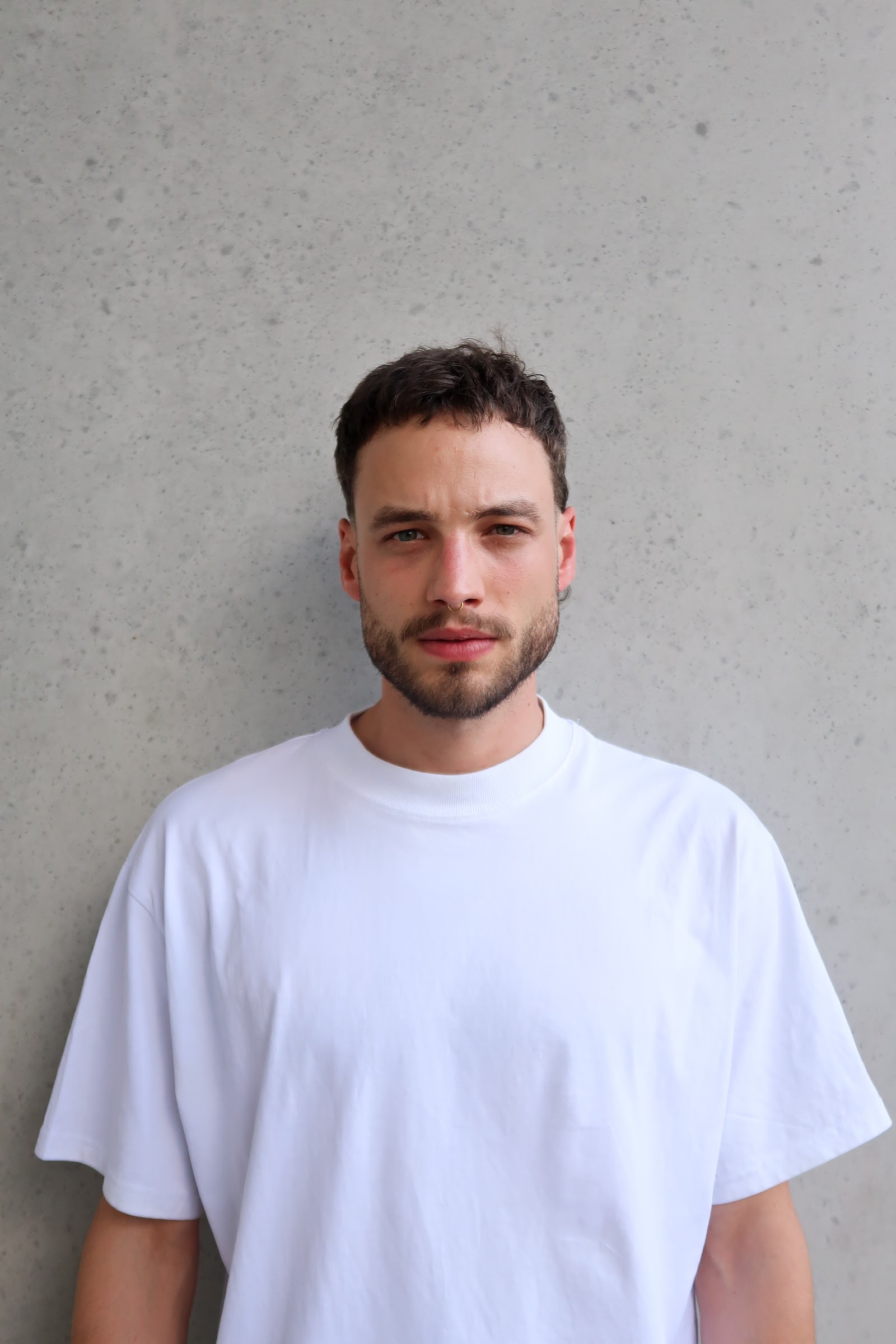
Cyril Dunděra is a Prague-based designer and creative director with a practice spanning furniture, product, interior and exhibition design. He studied at the Academy of Art, Architecture and Design in Prague and completed an Erasmus exchange at Konstfack in Stockholm.
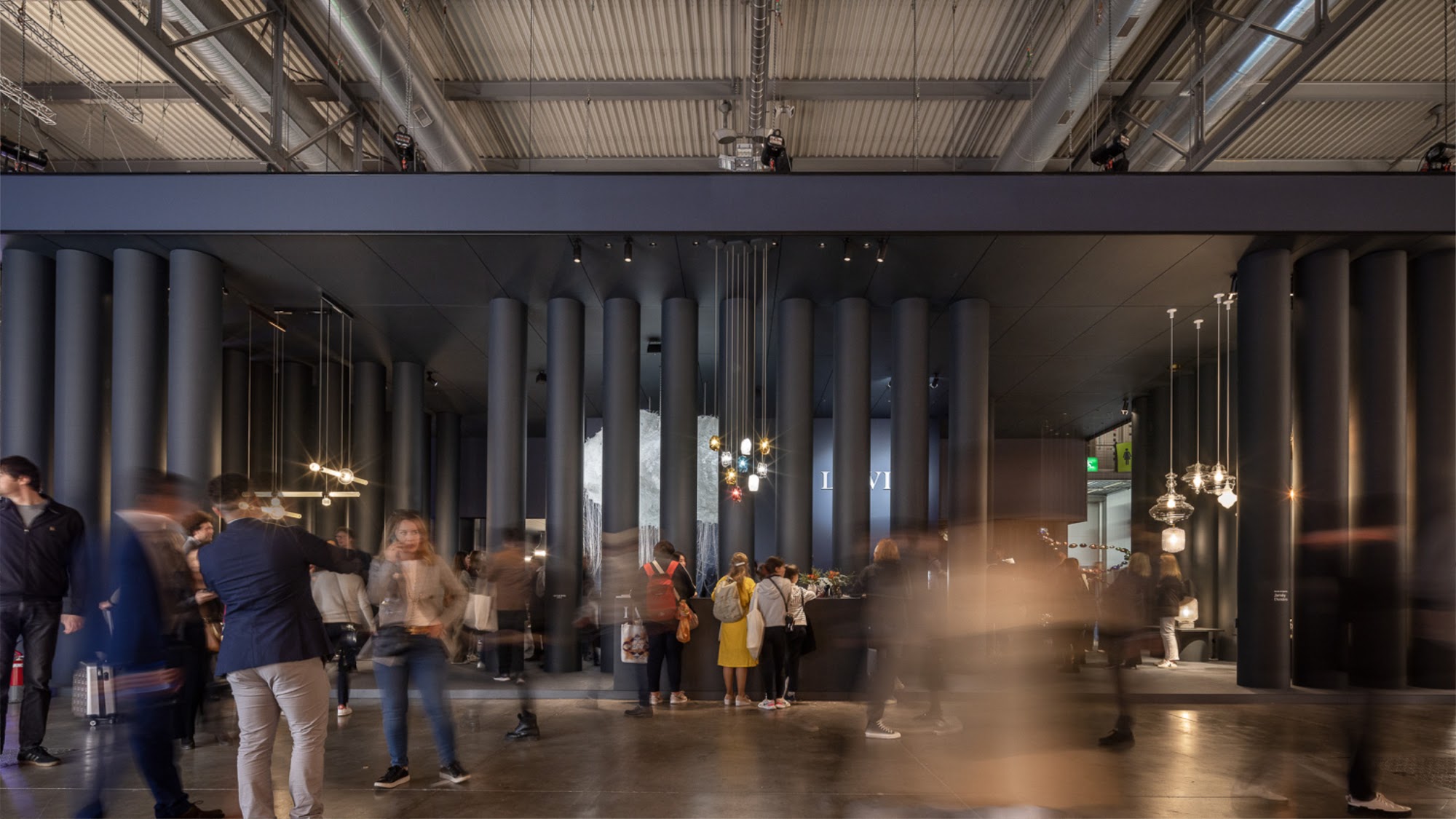
For nearly a decade he co-founded and ran JanskyDundera together with Matěj Janský, a studio that built an international reputation through collaborations with Cappellini, Kler and Lasvit, and exhibitions at Milan Design Week and Designblok.
His projects tend to sit at the intersection of material honesty and formal restraint, whether rammed earth tables made from metro excavations, landscape furniture cast in sand for a Baroque hilltop, or modular aluminium systems for a contemporary gallery. He now continues this work independently, taking on projects where design, craft and context are inseparable.
From the first idea to the finished space
End to end. From the concept to the build-up of stands, installations and trade shows
One-offs, small series, or something your brand wants to produce
I take ideas into production
About
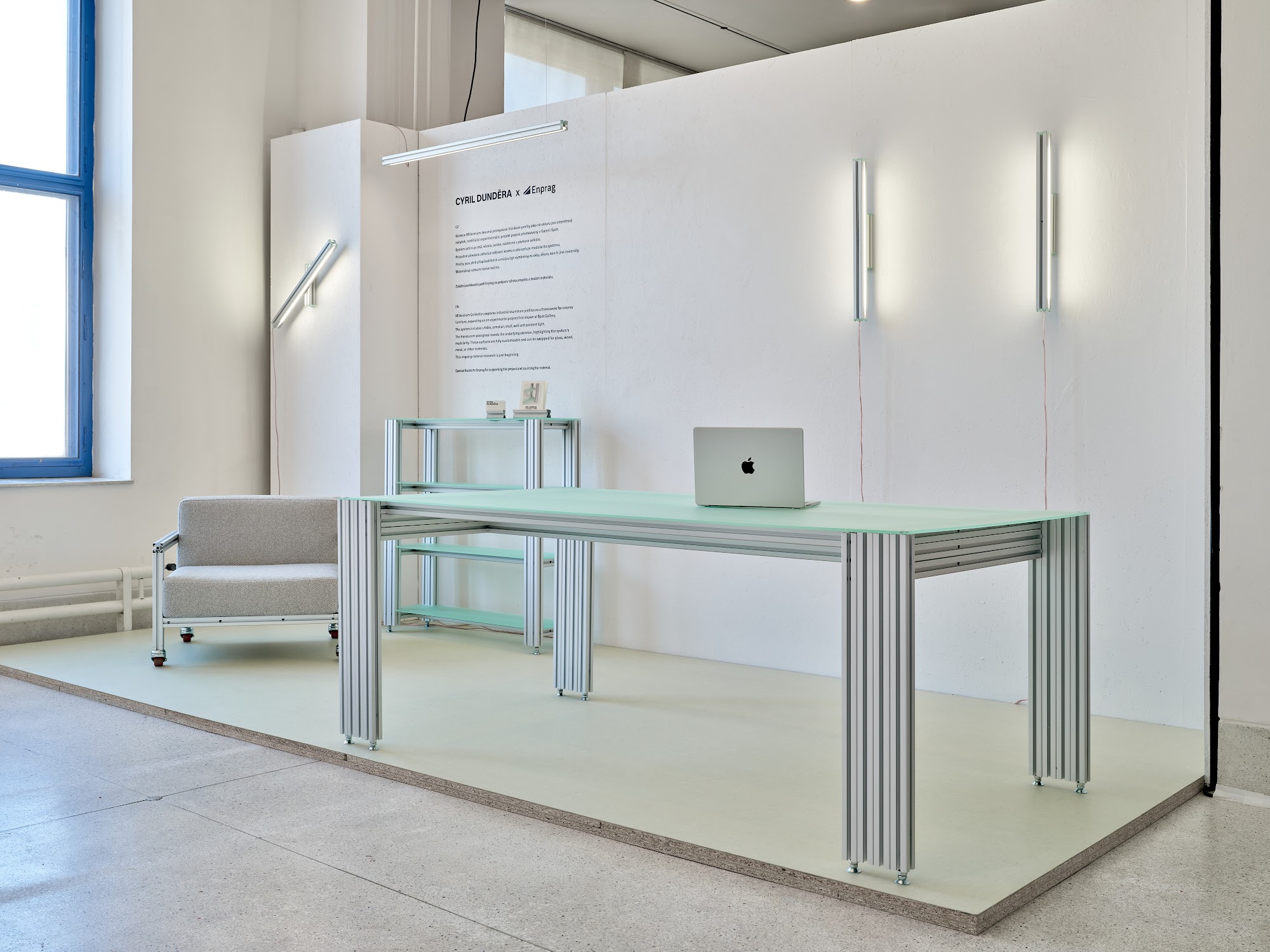
Strong yet lightweight. Silvery white. Recyclable and durable. Thanks to its impressive properties, aluminum is widely used within the automotive industry, in household appliances, and as a supporting material in construction. But what if, for once, it took the leading role? The Millennium Collection is built around classic aluminum profiles. Its 40 × 40 mm load-bearing profiles act as both a figurative and a literal framework, one that can be assembled like a construction kit. The matte finish and the form of the aluminum create an industrial setting, and when combined with other materials, the collection takes on several different faces. The armchair, wall light and table showcased at Designblok 2026 also serve as a kind of material study.
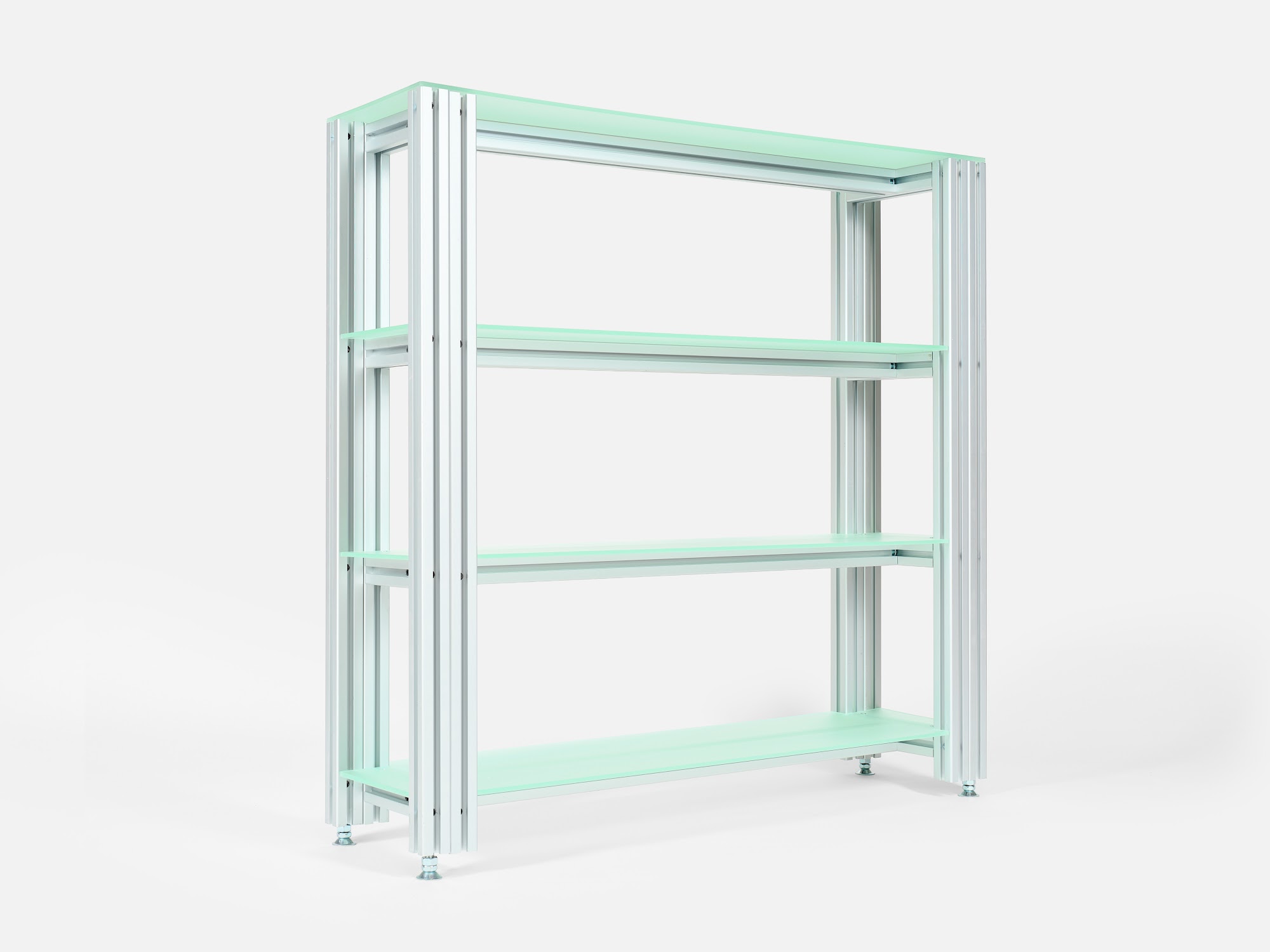
Dunděra wanted to work with aluminum profiles for some time, and after the success of his commission for Prague's SPOT Gallery, he set out to explore the material further. Sketching out the elements of that initial idea led to the Millennium Collection, which includes pieces such as a work desk, a shelving system, and a lighting object that complements Designblok 2026 theme: Light. Alongside the aluminum profiles, the collection is defined by translucent green plexiglass, which reveals structural details that would otherwise stay hidden. The pairing of cool matte metal and plexiglass strongly recalls the nostalgic futurism of the turn of the millennium. Dunděra, a millennial himself, drew on this feeling when naming his latest collection. It is presented in collaboration with Enprag, the company he also worked with on the original SPOT Gallery project. This time, Enprag supplied the aluminum profiles. Combining technical rigor with soft, elegant elements, the Millennium Collection suits airy spaces, and not only offices. It puts modularity and aesthetic clarity first, without losing sight of practical use. Because it is so adaptable, it isn't tied to any particular complementary material. In a future version, for example, the plexiglass tabletop could be replaced with wood, glass or another material, and the table's dimensions adjusted.
About
Soon!
About
Soon!
About
Each tray is cut from stainless steel sheet and hand-bent into form. Because the work is manual, no two trays are identical; the bending leaves its mark in each piece. They're made in five sizes to match each dish, from a single oyster to a full spread of canapés. The mirror-polished surface reflects light and surroundings while keeping the raw, bent edges visible as industrial material in direct contact with food.
Made for Mesaa, a dining experience project by Michelle Macias Mendez and Leona Rega.
About
The furniture collection was designed for Spot Gallery as a permanent flexible infrastructure for the space. Its launch was timed to coincide with an exhibition by artist Mark Ther, for whom several pieces were adapted as part of his installation.
The collection draws on the industrial vocabulary of aluminium profile construction, the same extruded sections used in factory equipment and technical staging. Placed within the ornate historicist interior of the gallery, the material contrast is deliberate. The system includes custom armchairs, a modular shelving unit, a coffee table doubling as a pedestal, and integrated frames for hanging artworks. All pieces are mounted on castors, allowing the gallery to reconfigure the space freely between exhibitions.
The aluminium profile logic defines every joint, proportion, and connection detail, resulting in a collection that reads as a unified system rather than a set of individual objects.
About
Soon!
About
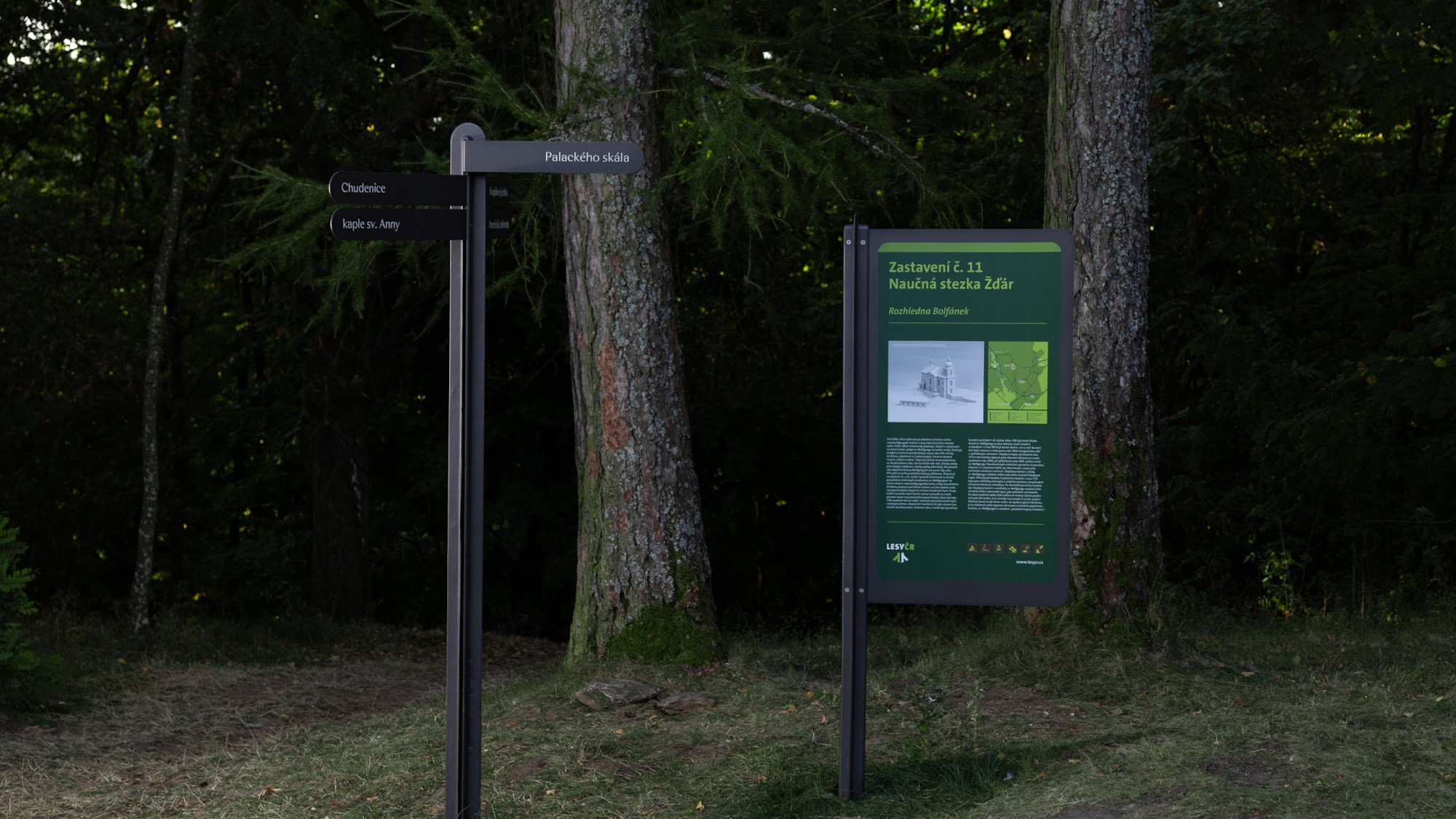
A new set of landscape furniture has been installed around the Bolfánek lookout tower in the Klatovy region, sensitively responding to the local architecture and the picturesque natural terrain. The project was developed for the municipality of Chudenice in collaboration with the Netoliko platform.
The collection includes modular benches, signposts, information boards, and waste bins. Inspiration came from repeated visits to the Bolfánek site and its surroundings. The area has a strong genius loci around the tower, the remains of a former Baroque church on the Žďár hill near Chudenice, surrounded by a romantic English park with the Lázeň chateau. The designed landscape, shaped by past generations, features mature alleys and architectural elements, all within sight of the Šumava hills.
The aesthetic of the furniture refers to the period when the Bolfánek complex was founded, yet its final form is timeless. It is composed of profiled cast aluminium rods with characteristic rounded ends reminiscent of a pilgrim's staff. Part of the collection was produced using sand-casting technology, which allowed for greater sculptural shaping and opened the way to a more poetic and artistic solution in harmony with the surrounding landscape and tower.
Production took place in close collaboration with craftsmen from the Velim foundry, where models imprinted into sand were transformed into aluminium originals. Thanks to this process, the outdoor furniture remains durable and functional for long-term use. A lacquered surface with a silver grain highlights the honesty of the material inside while also making it easy to maintain.
The project also included the graphic and illustrative design of the signposts and information boards, created in collaboration with illustrator and map author Václav Havlíček and the graphic studio Bušek+Dienstbier.
About
This interior was conceived as a calm, minimal stage for Ondřej Stára's jewellery collections. Stripped of any distractions, the space offers a clean contrast to the nearby workshop where his pieces are produced. Two custom-designed showcases, painted in his signature red, provide a focused setting for presenting and selling his work. Their straightforward, functional design reflects the brand's visual identity while ensuring the jewellery remains at the centre of attention.
About
The space is compact, built for two children with function layered into every surface. A corner desk wraps the room with mint green powder-coated steel sheet for magnetic play, paired with moss green marmoleum for tactile contrast and durability.
Storage integrates vertically: a built corner with removable upholstered elements that clear away when floor space is needed. The bed sits elevated at the top of stepped platforms that double as a play structure, accessed via a steel sliding pole.
Materials are chosen for wear and touch rather than appearance alone; the metal sheet takes magnets, the marmoleum handles hard use, the upholstery comes off. Every element serves function first.
About
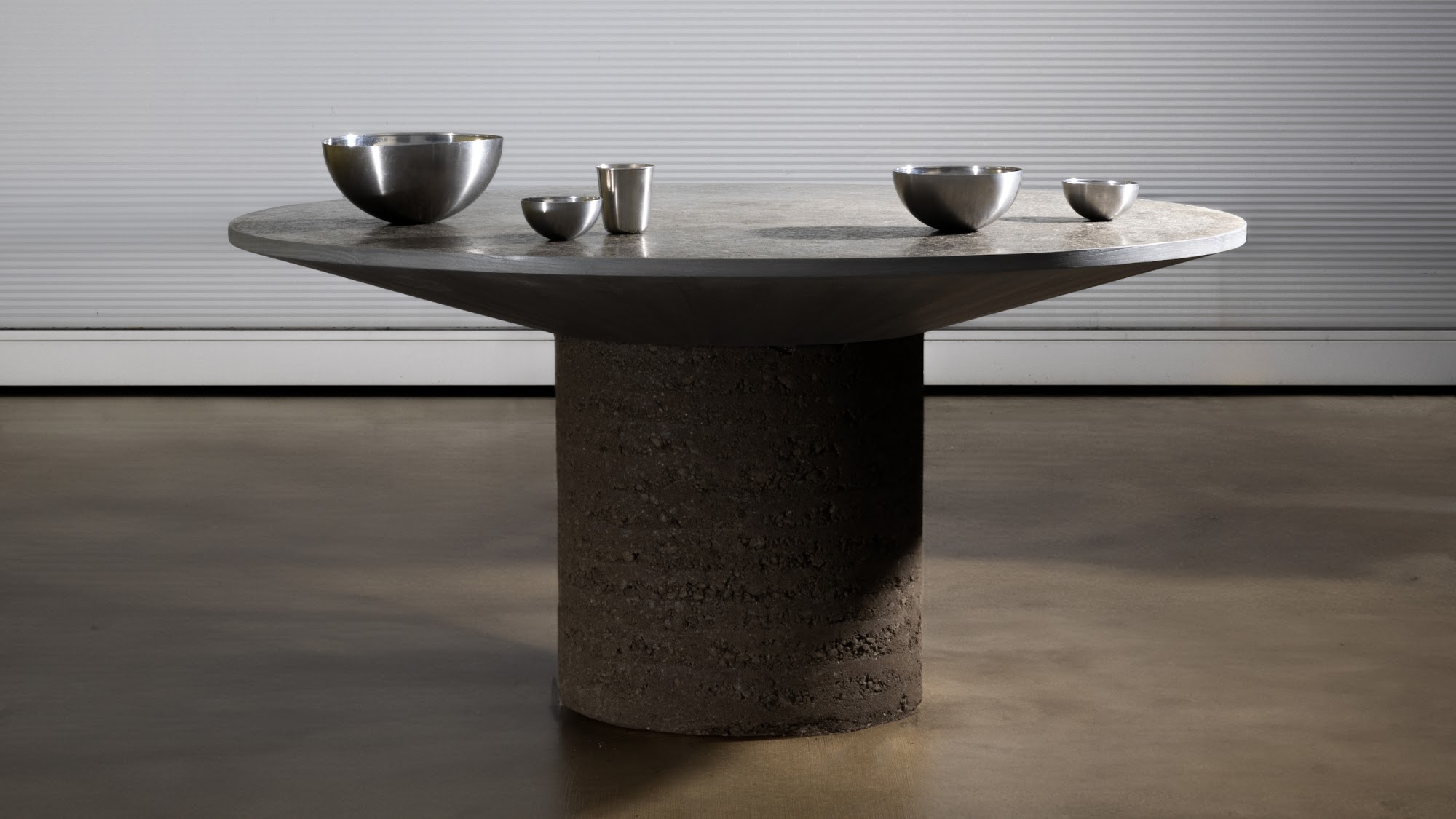
Two prototypes of the table are presented in the Young Earth installation at the International Design Festival Designblok 2024. This monumental piece of furniture made of rammed earth responds to ecological challenges and the aesthetic demands of current architecture and design.
The table is handcrafted from a mixture of recycled remnants of stonemasonry, clay, and water. It contains no cement additives, so the material is natural. The top of the darker version of the table is a sample of polished rammed earth flooring made from the excavations of metro line D, while its leg is a sample of rammed earth wall. The second, lighter prototype uses material from a landfill where excavated materials await further use, including Slivenec marble and other pieces from crushed stonemasonry scraps, also waste raw materials.
The processing of local materials using tamping technology has enabled the creation of an object with a unique aesthetic, haptic quality, and a low carbon footprint. The prototype was created in collaboration with the Kolem hlíny platform, which focuses on the use of rammed earth in architecture with an emphasis on sustainability and regenerative design.
Based on research, it was found that in the Czech Republic hundreds of millions of tons of earth are excavated every year due to construction activities. Most of it consists of natural soil and aggregates, which, despite their harmlessness, end up as waste, making up a third of the total volume. Transporting and processing clean soil increases economic and energy costs. In a context where construction is one of the largest polluters and responsible for more than a third of global CO2 emissions, it is necessary to focus on the efficient management of natural resources.
About
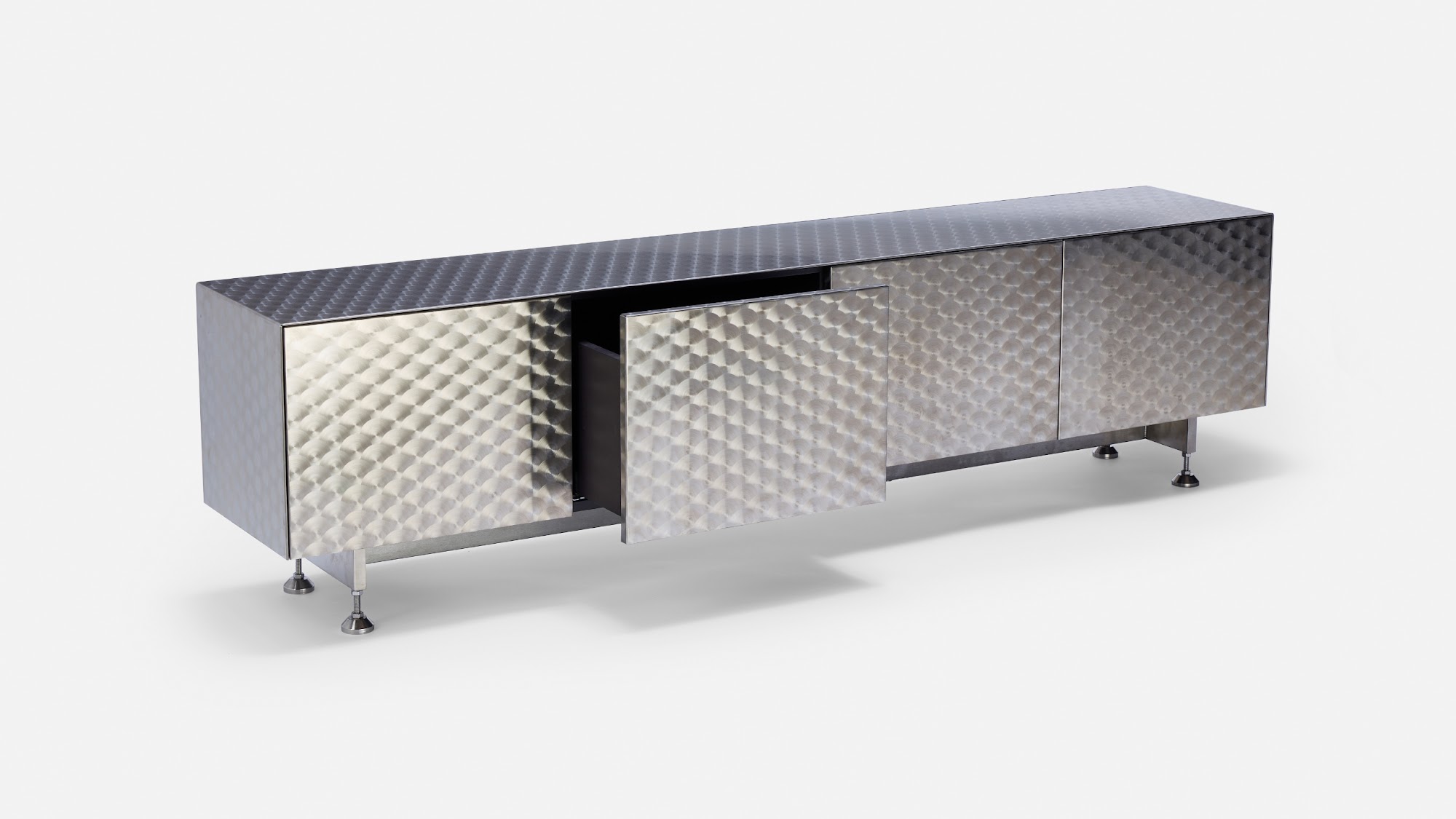
It represents a high-end storage solution that celebrates exceptional quality, precision craftsmanship, and sophisticated technical details.
Its design draws inspiration from the industrial brushed stainless steel finishes commonly used in the gastronomy industry. While our collection typically avoids overly decorative elements, this industrial aesthetic captivated us so much that we felt compelled to reimagine it for the world of contemporary interiors and design.
Technokrat features four spacious drawers equipped with a tip-on mechanism for seamless and effortless opening. Its core is constructed from dyed black MDF, meticulously encased in a brushed stainless steel shell. The entire structure is supported by a sturdy metal frame and robust adjustable feet, emphasizing its technical and architectural character.
About
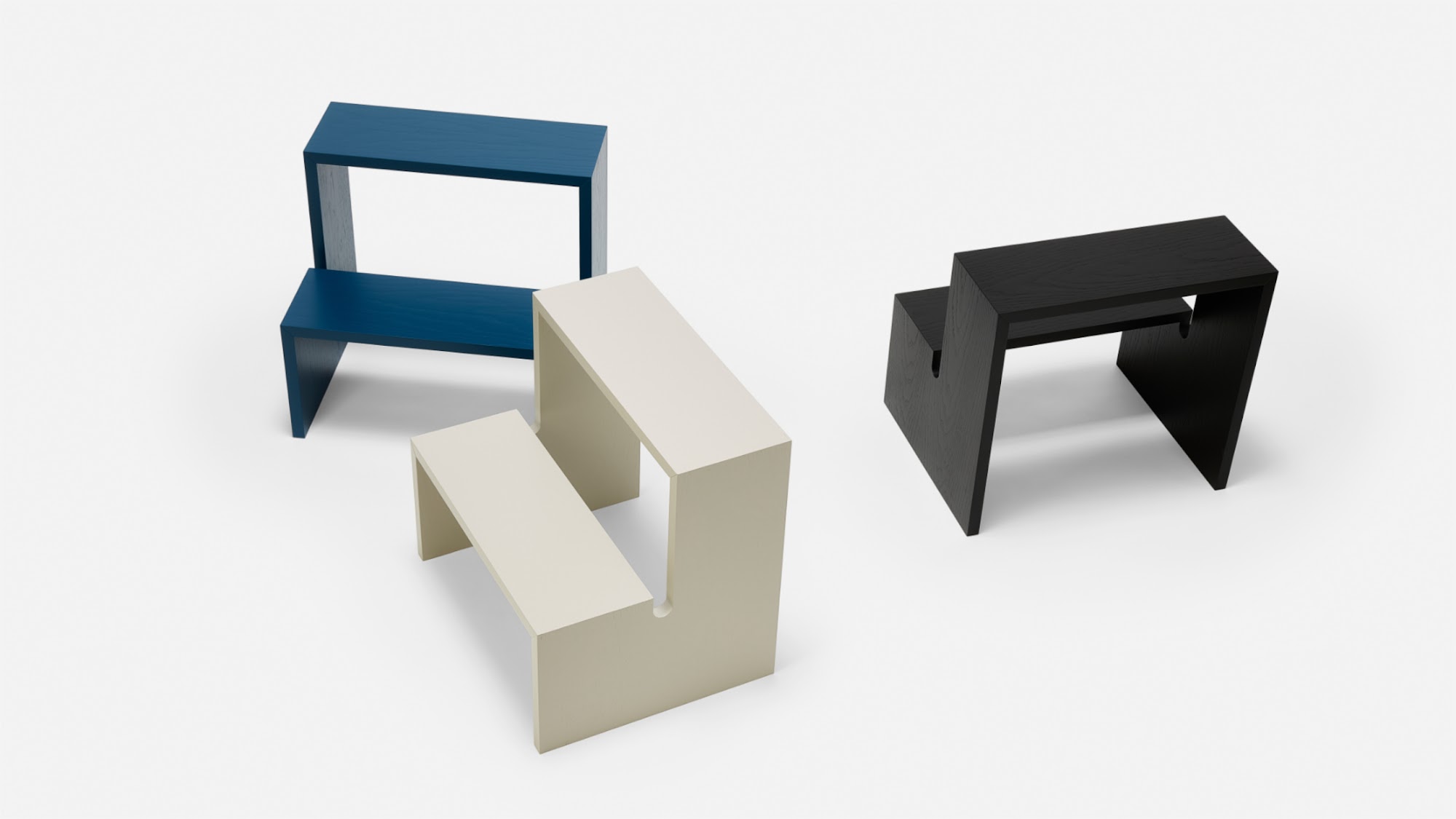
The visual anchor adds stability to this step stool: a detail of the cutout between individual steps in the shape of the letter U. Tip Top works great as a handy stool, nightstand, and side table, and can serve as a small children's table for playing and drawing. The possibilities of use are broader and depend only on your imagination.
The core of the steps is made of plywood with brushed oak veneer joined at an angle without visible edges. The lacquered surface is durable and easy to maintain.
About
The installation presents Master&Master's range through bold salmon shelving that frames industrial design and contemporary furniture. The backdrop wall holds recent work in deep compartments, creating clear sight lines for each piece.
Two items debuted here: the Technokrat cabinet with its mirrored stainless steel facade and precision drawer mechanism, and Tip Top Stairs, both designed by JanskyDundera studio for the company. The colour choice creates contrast against raw materials, letting steel and wood read with absolute clarity while establishing the visual language of the presentation.
Nominated for best producer presentation at Designblok 2024.
About
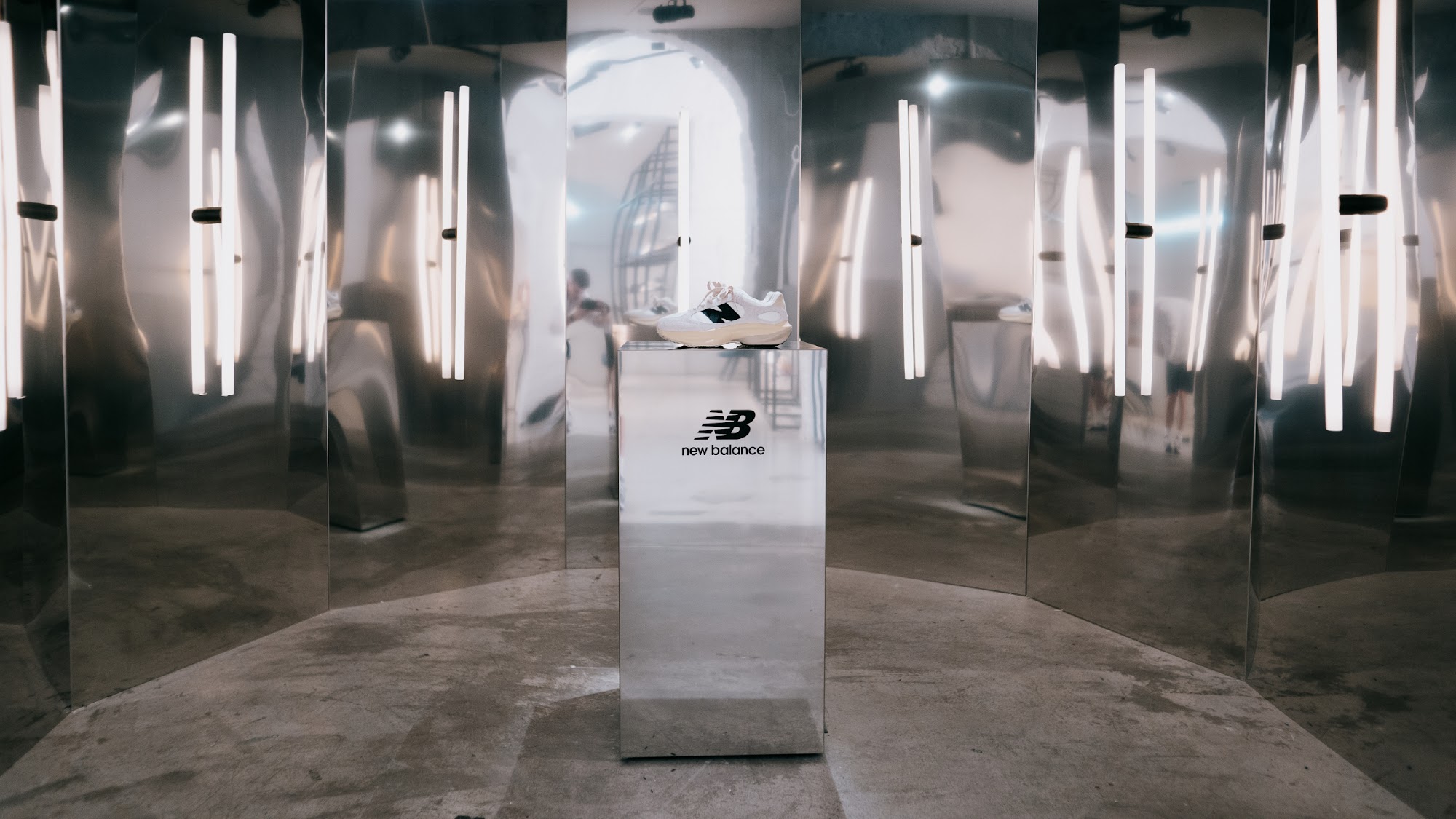
The space materializes a futuristic threshold through bent steel sheets and programmed light. A tube of neon runs through the centre, triggered to illuminate in expanding circles as visitors enter, creating the sensation of stepping into the chamber of a spacecraft.
The effect reads as a spatial gesture, isolating the sneakers at the core while the light sequence responds to movement through the room. The bent metal surfaces reflect both the neon and the viewer, multiplying the sense of depth and disorientation. Materials are minimal: raw metal, concrete, and the rhythm of the light itself.
The experience is one of arrival into an unfamiliar environment; activation by proximity makes the viewer part of the mechanism rather than a passive observer. Each entrance triggers the sequence anew, so the space performs differently depending on how many people move through it at once.
About
A limited collection for the Whiskas brand was auctioned at a public sale, with proceeds going to a transparent account held by the Prague Society for the Protection of Animals shelter. The project aimed to raise awareness of responsible pet ownership, the benefits of adopting animals from shelters, and the issue of cat homelessness.
About
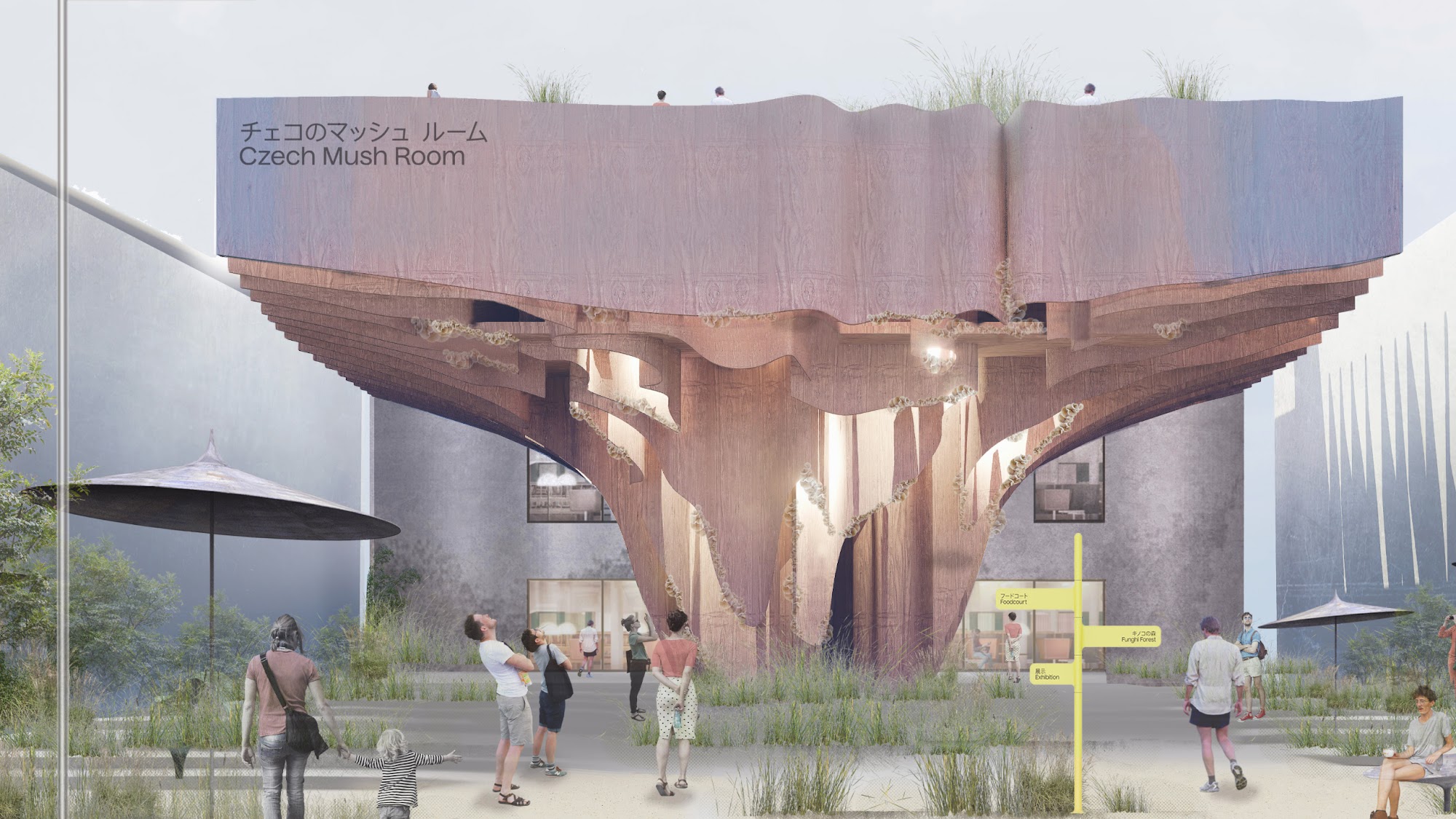
Walk through a forest and search for mushrooms. Follow a path that leads you into the realm of fantasy and mycelium: into a world you never dreamed of. You are walking through the very origin of life.
At the end of the path you find the best of Czech cuisine, but a little different. From classics like mushroom sauce or kuba to a mushroom in a bun.
With a bun in hand and rubber boots on your feet, you sit beneath the largest mushroom you have ever seen, still turning over what you have just experienced.
Our design for the Czech pavilion at EXPO 2025 in Osaka, Japan presents mycelium as a theme connecting the past, present, and future of this planet, and as an answer to more than one of the problems that trouble us today. The pavilion presents the Czech Republic as a creative and open society offering a platform for sharing ideas, with hope for a brighter future. Visitors to the exhibition become mushroom pickers who, moving from one installation to the next, gradually fill their basket with knowledge, emotions, and experiences.
About
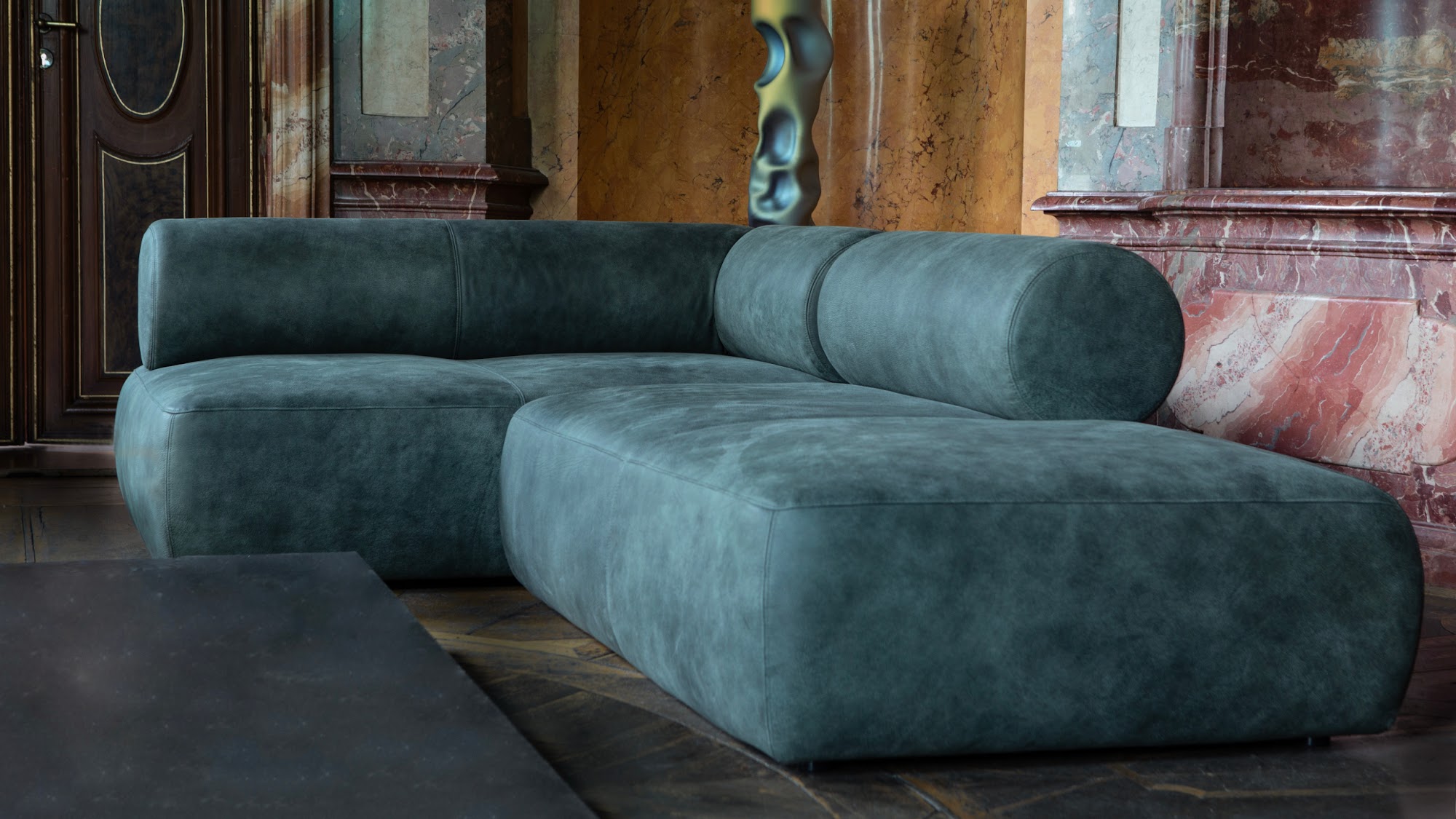
The plump backrest provides an extra large portion of support and comfort. The compressed tip creates a cozy nook with a characteristic detail of a soft fold. The basic L-shaped module works independently, making it suitable for smaller rooms. The intuitive folding into larger arrangements encourages use in public spaces. A calm aesthetic and uncompromising comfort ensure universal usability.
About
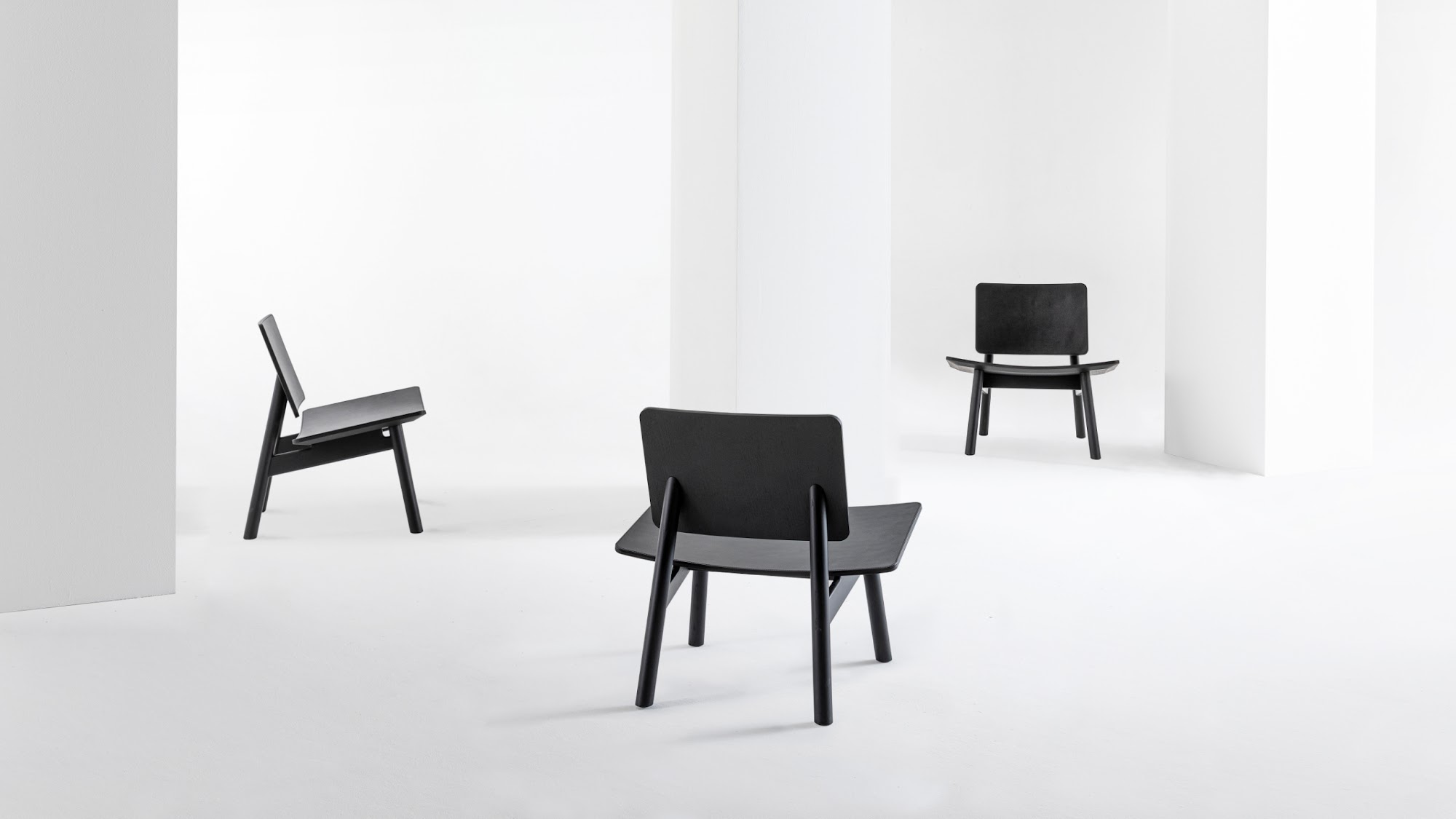
The extra-wide curved seat eliminates the need for armrests, while the subtle upholstery is finished in natural leather. The solid ash wood construction is sturdy yet surprisingly light. Its timeless design, blending Eastern asceticism with Scandinavian minimalism, suits both formal and informal spaces.
The Hiroi Lounge Chair is produced by the renowned Italian brand Cappellini.
About
It was created as a result of intensive collaboration with clients to fit into any interior. The generous depth and height accommodate bulky books, large houseplants, art, and anything else worth being on display. Different shelf heights can be easily combined.
Massive oak or ash, treated with natural or coloured oil, complement the carefully selected colours of the metal shelves with a back rim and optional leather application for an extra soft finish. The farthest corners of the shelves can be reached thanks to handy step stools embedded in the lower level.
About
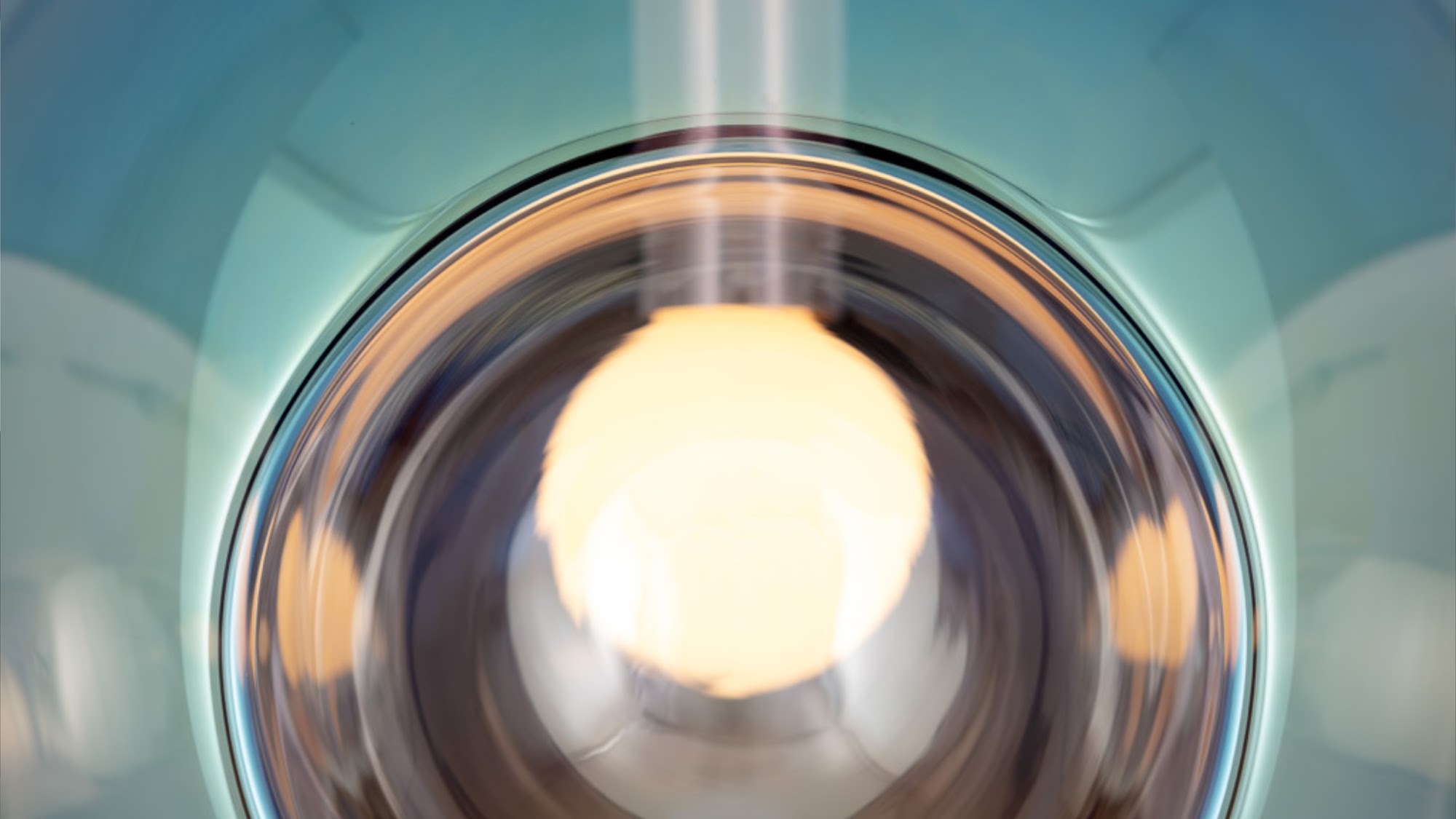
The colourful tiles of the Prague metro, with their arched recesses at the centre, served as a key inspiration for the glass sphere, deformed during blowing from every viewing angle. The light passing through the recesses creates a unique circular halo around their perimeter, giving the illuminated interior a magical atmosphere.
Globe Metro is manufactured by the internationally renowned Czech company Lasvit.
About
The creation of this set presents a technical challenge that demands the precision and sensitivity of an experienced glassmaker. The material comes to life through breath, tightly enveloping the rectangular mirror like a large piece of chewing gum frozen in time. The coated glass variant combines the precise, flat reflection of the mirror with the distorted reflection of the bubble-like base.
About
The collaboration between UMPRUM and Profimed within the Art of Swissdent competition led to the realization of the winning design by Cyril Dunděra: a marble statue of Penelope with a toothbrush in her mouth. At the 20th edition of the International Design Festival Designblok, young designers created an installation of the winning works, for which they received the Designblok award in the category Best Installation by a Manufacturer.